A Vintage Birthday SVG Asset for T-Shirt Graphics and Merchandise Design
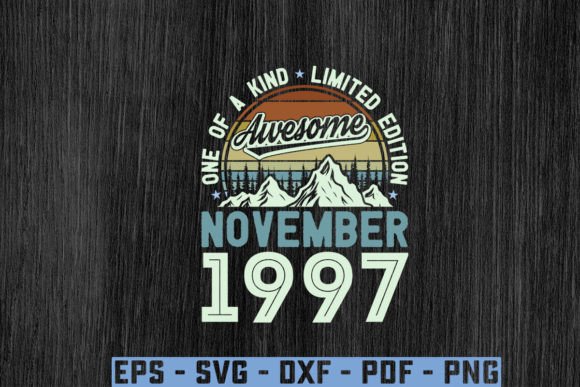
When a potential design asset lands on my desk, my first instinct is to gauge its emotional temperature. The Awesome Since November 1997 Birthday Svg immediately radiates a specific warmth. It’s not a cold, corporate graphic; it feels like a retrieved memory. The vintage birthday concept, anchored by a specific year, evokes nostalgia, personal celebration, and a touch of playful retro charm. This isn’t for a tech startup’s annual report. This asset whispers to projects centered around individuality, milestone celebration, and handmade authenticity.
The Visual Mood: Nostalgia as a Design Tool
This graphic design asset speaks to a distinct style: intentional vintage. It’s the visual equivalent of finding a well-loved birthday card from the late 90s. For a designer, this mood is a powerful tool. Imagine a client who runs a small boutique specializing in personalized gifts, or an Etsy shop owner launching a “birthday in a box” product line. This SVG design provides an instant thematic anchor. It can transform a simple t-shirt design into a story, a mug into a personalized keepsake, or a social media graphic for a local bakery’s birthday month campaign into something that feels curated and special.
Where This Vintage Asset Excels in Real Client Projects
In practical application, the Awesome Since November 1997 Birthday Svg performs strongly in areas where mood and decoration are primary goals. For product mockups, it shines as a hero graphic on the center of a t-shirt or tote bag. As a printable design, it could anchor a birthday invitation or wall art for a themed party. In digital spaces, it becomes a compelling focal point for Pinterest pins or Instagram posts celebrating a brand’s own “birthday” or a customer’s milestone.
Consider it for packaging design details on a limited-edition product box, or as a decorative accent on a website’s event page. Its strength lies in large layout areas where the vintage styling can be appreciated, or as a supporting brand element for a business that itself embraces a retro, handmade aesthetic. For sublimation design or Cricut projects aiming for a personalized, crafty feel, this asset is directly on point.
Navigating Potential Pitfalls in Professional Layouts
However, a professional designer must also see the limitations. This asset should be used carefully in contexts demanding stark clarity. In small sizes—like a tiny logo on a website footer—the intricate vintage feel may dissolve into visual noise. Placed on a crowded layout or a complex background, it risks losing its defining character and muddying the visual hierarchy.
It is not inherently suited for minimalist branding or projects that require a very clean, modern silhouette. For professional corporate materials, like a financial report cover, it would feel incongruous. The key is to match the asset’s emotional appeal with the project’s brand voice. Its power is in its specific nostalgia; misapplication dilutes that power.
Impact on Brand Perception and Audience Engagement
Using the Awesome Since November 1997 Birthday Svg effectively can significantly affect a project’s perceived authenticity. For a small business branding itself around craftsmanship or personal history, this asset can enhance visual trust and recognition. It creates an emotional appeal that resonates with audiences seeking connection over slickness. In marketing visuals for a local event or a seasonal campaign centered on celebration, it boosts audience engagement by feeling uniquely tailored, not generically assembled.
Conversely, if used on a project where sleek professionalism is the goal, it could undermine the overall impression. Consistency is key. This asset asks the designer to commit to a certain tone—a commitment that, when made correctly, polishes the final result into a cohesive, mood-driven design.
Essential Designer Checks Before Client Deployment
Before this digital product ever touches a real client file, rigorous testing is non-negotiable. First, always confirm the commercial license. Assuming it’s cleared for commercial design work, my next steps are practical.
- Test scalability: Preview the SVG at both very large and very small sizes. Does the “vintage” texture hold up as a massive poster graphic? Does it collapse into an indistinct blob at 1cm on a product label?
- Check contrast and adaptability: Render it in black and white. Place it on both light and dark backgrounds in your mockups. Is the message still legible? Does it retain its character?
- Assess editability: As an SVG design, open the vector file. Can you easily isolate elements, change colors, or integrate it with other brand fonts? Does it clash with a clean sans-serif font, or complement a playful script font? This flexibility is crucial for brand identity systems.
- Validate in final contexts: Place it on real t-shirt design mockups, mug templates, and social media graphics frames. Test a small print sample if possible. Does the print quality render the details accurately?
- Consider format support: If PNG files are included, inspect the transparency channels. Clean edges are vital for overlaying on various packaging design or web design backgrounds.
This process moves the asset from a promising graphic to a vetted design asset. It answers whether it will truly improve the visual mood and help the final result feel polished under real-world conditions.
Beyond the T-Shirt: A Versatile Creative Asset
While naturally aligned with t-shirt graphics and merchandise, the Awesome Since November 1997 Birthday Svg’s utility extends further. For editorial design in a blog post about anniversary celebrations, it could be a striking visual opener. In a digital ad for a print-on-demand service showcasing personalized year-themed products, it serves as perfect proof of concept. It can be the cornerstone of a themed collection of digital design assets for a creative marketplace—pairing with other retro elements for stickers, tote bags, and printable wall art.
Ultimately, this asset is a mood-setter. It won’t solve every design problem, but for the right client project—a handmade business celebrating its roots, a birthday campaign for a boutique brand, or a limited-edition product launch anchored in nostalgia—it provides a ready-made visual language. It allows the designer to bypass generic celebration clipart and offer something with built-in history and heart. That is a tangible value in a professional design workflow, turning a simple download into a catalyst for more polished, emotionally resonant creative design.