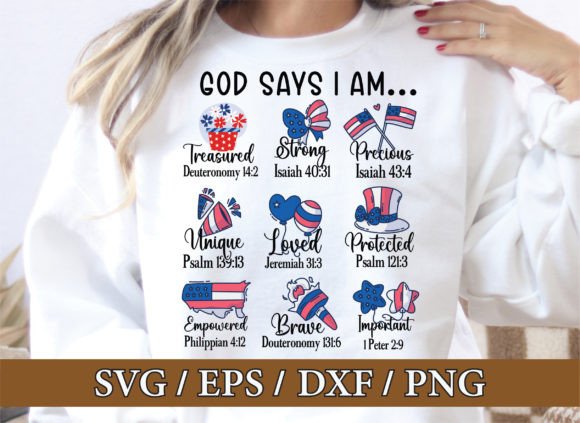
Beyond T‑Shirts: The Graphic’s Editorial & Publishing Power
In my daily workflow, where building reader trust through polished visuals is paramount, I often evaluate design assets for their true editorial potential. When reviewing the God Says I Am 4th of July SVG, my first impression wasn’t just of a t‑shirt graphic, but of a versatile tool for digital storytelling. The design immediately establishes a clear, seasonal, and celebratory mood. It feels bold, patriotic, and inherently community‑focused, making it a natural fit for lifestyle blogs, family‑oriented content, patriotic history sites, and any publishing niche celebrating American heritage or summer festivities.
Immediate Visual Mood & Content Niche Alignment
The strong typographic statement and classic July 4th color palette create an editorial atmosphere of pride and celebration. This isn’t a subtle, minimalist piece; it’s a confident, declarative graphic asset. For a publisher, this means it can instantly signal to readers the theme of your content—whether that’s a historical article, a roundup of holiday recipes, a family‑friendly activity guide, or a patriotic personal essay. Its style is both modern and traditional, allowing it to bridge playful, community‑driven content with more earnest, educational material about the holiday’s significance.
Real‑World Publishing Applications for Bloggers & Creators
My primary consideration is always: how does this asset function outside of its stated product category? For the God Says I Am 4th of July SVG, the applications are extensive for anyone managing a content website.
- Featured Blog Images & Article Headers: This graphic can become the cornerstone of your July 4th‑themed posts. Used as a bold header or a striking sidebar accent, it establishes visual hierarchy and tells the reader exactly what the article is about before they even read the headline.
- Pinterest Pins & Social Media Graphics: In the crowded space of social media, clarity wins. This design, when adapted into a pin or post, offers immediate category recognition. Its strong message and colors are perfect for driving click‑throughs for seasonal guides, printables, or patriotic content.
- Newsletter Banners & Digital Guide Covers: Imagine a weekly email blast leading up to Independence Day. This SVG provides a consistent, professional‑looking banner that builds anticipation. Similarly, it can serve as a compelling cover for a downloadable digital guide on holiday crafts or history, elevating your lead magnet from simple to standout.
- Downloadable Printables & Content Upgrades: Its customizable nature means you can easily integrate it into worksheets, coloring pages, or party planning checklists offered as content upgrades. This adds tangible value to your posts and strengthens reader engagement.
- Website Banners & Category Thumbnails: For a seasonal site section or a “Patriotic Living” category page, this graphic acts as a powerful visual identifier. It makes your site navigation more intuitive and visually cohesive.
- Affiliate Content Visuals: If you’re promoting July 4th‑related products or services, using this clean, trusted‑looking design in your affiliate marketing visuals can enhance credibility and feel less like a direct ad, more like curated editorial content.
How This Asset Supports Content Performance
From a publisher’s lens, every graphic design asset must contribute to performance goals. Here’s how this one delivers:
- Stronger First Impression: It immediately communicates topic and tone, reducing cognitive load for new visitors.
- Better Click‑Through Potential: On platforms like Pinterest or in email newsletters, its declarative style is inherently clickable.
- More Consistent Branding: Using it across various touchpoints (blog, social, newsletter) for your seasonal content creates a unified brand identity.
- Improved Reader Trust: Polished, appropriate visuals signal editorial care and quality, making readers more likely to stay and return.
- More Professional‑Looking Pages: Replacing generic stock images with this customized, purposeful graphic elevates the entire page’s aesthetic.
Optimal Use Cases & Publisher Recommendations
In my experience, the God Says I Am 4th of July SVG works best as a dominant visual element in key locations.
- Hero images for landing pages dedicated to holiday content.
- Article thumbnails in grid‑based blog layouts.
- Pinterest pins that are vertical and text‑enhanced.
- Newsletter headers for a sequence of holiday‑themed emails.
- Social media preview images for linked blog posts.
However, it should be used carefully in certain contexts. Its bold, decorative nature might clash with text‑heavy blog images where the graphic would compete with paragraphs. It may feel too festive for very serious, corporate, or minimalist professional niches. Also, in small mobile thumbnails, the full detail might be lost, so a simplified version or a cropped focal point might be necessary.
Essential Practical Notes Before Publishing
Before integrating this into any live project, I run a standard set of publisher checks.
- Test on Desktop & Mobile: How does it scale? Does it retain impact on a small screen?
- Preview in a Real Layout: Drop it into your actual blog template alongside headline text. Check for contrast and readability.
- Experiment with Font Pairings: Place it beside your typical serif body font, a clean sans‑serif, or a script font to see how it harmonizes.
- Consider Performance: Ensure the final exported file (PNG, JPG) is properly compressed for web performance without losing quality.
- Verify Licensing: Crucially, confirm the commercial license terms if you’re using it on monetized websites, within paid digital products, or on affiliate pages. This is non‑negotiable for professional use.
The Final Editorial Verdict
The true value of the God Says I Am 4th of July, 4th July SVG for bloggers and digital publishers lies in its transformation from a simple t‑shirt design into a multifaceted graphic design asset. It supports a complete content ecosystem around a seasonal theme. By leveraging it across featured images, social graphics, and downloadable resources, you can build a visually coherent and authoritative content hub that captures audience attention, reinforces your message, and ultimately, makes your publishing work look more intentional and professionally crafted. In the end, it’s about using design not just for decoration, but for clear, effective visual communication that serves both your readers and your editorial goals.