Its Okay Not to Be Okay: A Mental Health Graphics Review
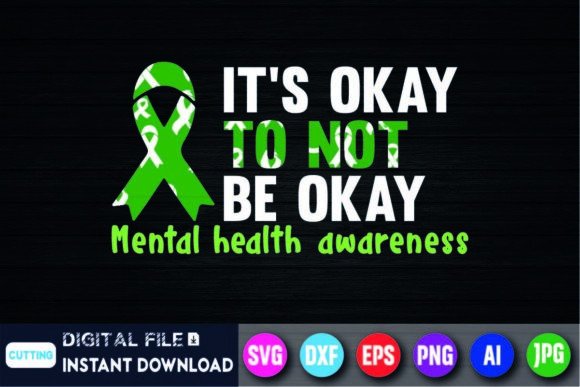
As a brand designer preparing a campaign for a wellness-focused client, my first task is sourcing visual assets that balance authenticity with professionalism. When I opened the Its Okay Not to Be Okay Mental Health graphics, my immediate impression was one of compassionate clarity. The phrase itself, rendered as a layered SVG design, carries a powerful, affirming mood. It doesn’t shout; it speaks. This is crucial for marketing in the mental health space, where audience perception hinges on trust and emotional resonance. The graphic design asset feels inherently suitable for casual, human-centered branding—think lifestyle content, event promotions for support groups, or merchandise for authentic community-building.
The Emotional Tone for Modern Brand Communication
This isn’t a cold, clinical illustration. The design brings a tone of gentle permission. For a small business launching a line of self-care products or an online coach building a content kit, this asset provides an immediate visual shorthand for vulnerability and strength. In a real marketing project, like refreshing social media visuals for a mindfulness app, this creative design could become the hero graphic for a month-long “Self-Acceptance” campaign. It creates an emotional connection that feels inclusive, not institutional, making it ideal for content marketing aimed at building audience trust.
From SVG Files to Campaign Visuals: A Practical Fit
The promise of WORD BY LAYER SVG FILES compatible with cutting software like Cricut unlocks versatility far beyond T-Shirt Designs. For a brand owner, this means the same core asset can maintain visual consistency across wildly different formats. Imagine a digital campaign: the layered SVG allows for easy color adaptation to match your brand identity palette. It can scale perfectly for a large website header announcing a blog series, then be used with the same integrity on a small product label for a journal or candle. This scalability supports a professional appearance across the entire customer journey.
Where This Design Asset Strengthens Marketing Goals
Let’s walk through a real scenario. A creative entrepreneur is preparing a digital campaign for a new “Mental Health Matters” printable design bundle. Using Its Okay Not to Be Okay Mental Health as the central illustration creates a stronger first impression. Its clear message acts as a visual anchor, improving product presentation instantly. On social media graphics—Instagram posts, Pinterest pins, Facebook ads—it provides a clearer visual hierarchy: the affirming text is the focus, surrounded by supporting copy. This leads to better engagement and makes the entire campaign more memorable.
- Brand Identity & Logo Accents: While likely not a primary logo, it serves as a powerful secondary brand element for editorial graphics or packaging inserts.
- Social Media & Digital Ads: Its message is inherently shareable, perfect for Instagram stories or as a background for quote-based Pinterest graphics.
- Content & Web Design: It can function as a standout blog graphic, email banner for a newsletter, or decorative element in a media kit.
- Merchandise & Physical Promotions: Beyond t-shirts, think stickers for event giveaways, designs for tote bags, or artwork for Canva templates used for workshop flyers.
Hero Graphics and Campaign Headers: The Ideal Applications
This design asset works excellently as a focal point. Its straightforward message makes it a natural choice for hero graphics on a landing page, campaign headers for a product launch, or bold social media covers. For a blogger creating a lead magnet on coping strategies, incorporating this graphic into the editorial layout immediately sets the tone. It also shines as a packaging accent—a small debossed or printed element on a box—adding a layer of thoughtful brand communication without overwhelming the main product information.
Navigating Potential Limitations for Professional Branding
Every asset has contexts where it requires careful application. The Its Okay Not to Be Okay Mental Health design, with its specific emotional message, should be used carefully in certain situations.
- Formal Corporate Branding: It may feel out of place for a strictly corporate, financial, or legal brand’s primary materials.
- Dense Information Layouts: In a text-heavy ad or a complex infographic, it could compete with the main data-driven message.
- Overly Minimal Brands: If your brand aesthetic is extreme minimalism (think a single color and stark geometry), this illustrative phrase might disrupt that purity.
- Small Mobile Graphics: At very small sizes, the layered details might lose readability, so simplified versions or bold color contrasts are needed.
The key is to treat it as a supportive brand element, not a universal stamp. Always preview it on mobile screens and test its readability when scaled down for a footer or small icon.
A Brand Designer’s Practical Checklist Before Deployment
Before integrating this into a live campaign or client work, I run a few essential tests. First, I place the SVG into real campaign mockups—a Facebook ad template, a mock blog header, a t-shirt product shot. This reveals how it balances with other elements. I test it against my brand’s color palette, ensuring the layers work in both full color and black and white for print versatility. I then check how it pairs with different font styles: does it harmonize with a supportive serif font for editorial use, or feel cohesive with a clean sans serif font for web design? Comparing it against competitor visuals ensures it offers a unique emotional angle.
Most critically, I confirm the commercial license scope. As a digital product from a creative marketplace, understanding its license for use in paid campaigns, client work, or physical merchandise is non-negotiable for professional branding. This due diligence protects the project and ensures the asset can truly support small business branding goals without legal hiccups.
Final Impressions: A Versatile Asset for Human-Centered Marketing
In conclusion, Its Okay Not to Be Okay Mental Health is more than a T-Shirt Designs graphic. It’s a versatile marketing visual that carries a universally relevant message. For brand owners, marketers, and content creators working in wellness, lifestyle, community, or any field valuing authentic connection, this design bundle component offers a ready-made tool for building stronger recognition and emotional connection. By applying it strategically—as a hero visual, a consistent branding accent, or a shareable social graphic—you can create commercial design materials that attract attention without looking messy, instead presenting a clean, compassionate, and professionally cohesive face to your audience.