An Honest Look at the "I'm Not Misbehaving" Autism Design
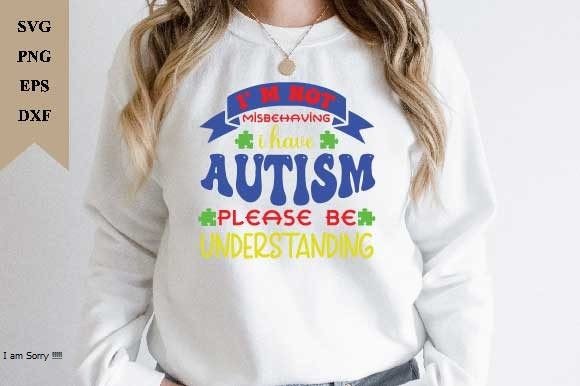
When you work with embroidery designs day in and day out, you develop a kind of gut feeling about them. You can almost see the stitches forming before you even load the file. Today, I’m looking at the "I'm Not Misbehaving I Have Autism Please Be Understanding" design, a piece that falls into the T-Shirt Designs and Graphics category, but whose real potential lies far beyond a simple tee. This isn't just a graphic; it's a message, and handling it with care in our embroidery work is crucial.
The Immediate Mood and Message
The first thing that strikes me is the directness. The phrase is a clear, compassionate statement. In embroidery, where every stitch carries weight, this design creates an immediate mood of advocacy and gentle education. Its visual personality is straightforward—the power is in the words themselves, not in ornate decorative elements. This means our execution as embroidery designers becomes paramount. A clean, highly legible stitch-out is essential to carry the sentiment respectfully. It naturally belongs to projects meant for connection: items for caregivers, educators, or supportive family members, or even self-expression pieces.
A Real Project Scenario: The Custom Embroidered Tote Bag
Let’s walk through a real case. Imagine a client requests a custom tote bag for a preschool teacher who specializes in neurodiverse classrooms. They want something durable, professional, but also heartfelt. This design fits perfectly. On a sturdy canvas tote, the text would be the central focus. I’d consider a crisp satin stitch for the lettering to give it a solid, clean presence. The lack of excessive detail in the design layout is actually a benefit here; it translates beautifully into embroidery without losing clarity on a textured fabric. The finished product feels like a useful, everyday tool that also quietly spreads a vital message.
Where This Design Finds Its Home
This embroidery file has a surprisingly wide application when you think about it. Beyond t-shirts, it shines on:
- Custom apparel like sweatshirts and hoodies, offering comfort and statement.
- Practical items like aprons or kitchen towels for a home environment.
- Personalized gifts such as pillow covers or blankets, adding a layer of deep meaning.
- Small business merchandise for shops focused on advocacy, therapy, or supportive resources.
- Embroidered patches, which can be applied to backpacks, jackets, or caps for a movable symbol.
For baby clothes or nursery decor, I'd approach it thoughtfully, perhaps simplifying the scale for a smaller hoop size but maintaining the integrity of the message. In a craft business or Etsy shop, this design could anchor a whole line of supportive products.
Navigating the Stitching Nuances
Performance in real-life embroidery hinges on practical choices. The phrase is relatively long, so hoop size matters. On a curved surface like a cap, careful digitizing (or adapting the provided file) would be needed to keep the text readable. For thin or stretchy fabrics, like on a t-shirt, a robust stabilizer is non-negotiable to prevent puckering and ensure the words remain sharp after washing.
The biggest consideration is stitch density and small details. This is text-based. Tiny lettering or overly dense fill stitches could make the design stiff and hard to read. I’d strongly advise testing this design on scrap fabric first, especially on both light and dark backgrounds. Thread color contrast is key—a bright, clear contrast against the fabric makes the message stand out with respect and clarity. For dark fabrics, a lighter thread with perhaps a slight underlay would ensure every word is understood.
Spaces for Extra Caution
Some applications require a designer's pause:
- Very small hoop sizes might compress the text too much, losing legibility.
- Highly textured fabrics like some blankets could require a simpler stitch type to keep it clean.
- On items needing frequent washing, like baby items, opting for a durable thread and secure stitching technique will preserve the message.
- If creating an embroidered patch for commercial sale, the edges of the text need to be especially clean to maintain a professional look.
The Impact on Your Work and Your Customer
Using this design well affects more than just the stitch-out. It influences visual appeal through its straightforward honesty. Stitching clarity directly translates to customer trust—a poorly executed, blurry message would undermine the design's intent. For handmade presentation, a neatly embroidered version on a quality product speaks volumes about your care as a maker.
For giftability and professionalism, this design carries inherent weight. It’s not a casual slogan; it’s a meaningful statement. That elevates the perceived value of the finished product. In a boutique or small shop, offering such an item shows thoughtfulness and can deeply engage buyers looking for products with purpose. It aligns with a brand centered on support, awareness, or inclusivity.
Essential Designer Notes Before You Hoop It
Before running this machine embroidery design for a client project or your own craft business items, here’s my practical checklist:
- Always test on scrap fabric first, mimicking your final product’s material.
- Check thread color choices against your fabric in both natural and indoor light.
- Review the stitch density in your software preview; adjust if areas look too thick.
- Confirm the hoop size you plan to use can accommodate the text length without cramping.
- Inspect the small details, particularly the spacing between words.
- Run a black and white mockup to see it purely as shape and form.
- Use the proper stabilizer for your fabric—don’t skimp here.
- Crucially, confirm the licensing terms of the digital embroidery file. Understand clearly whether it’s approved for personal use, commercial projects, or selling finished products. This information should be provided by the seller; if it’s not clearly stated, seek clarification before proceeding.
The "I'm Not Misbehaving I Have Autism Please Be Understanding" design is more than a graphic. It’s a project that asks for our attention and skill as embroidery designers. When stitched with care onto a thoughtfully chosen product, it becomes a powerful piece of handmade communication—one that carries value far beyond the threads used to create it.